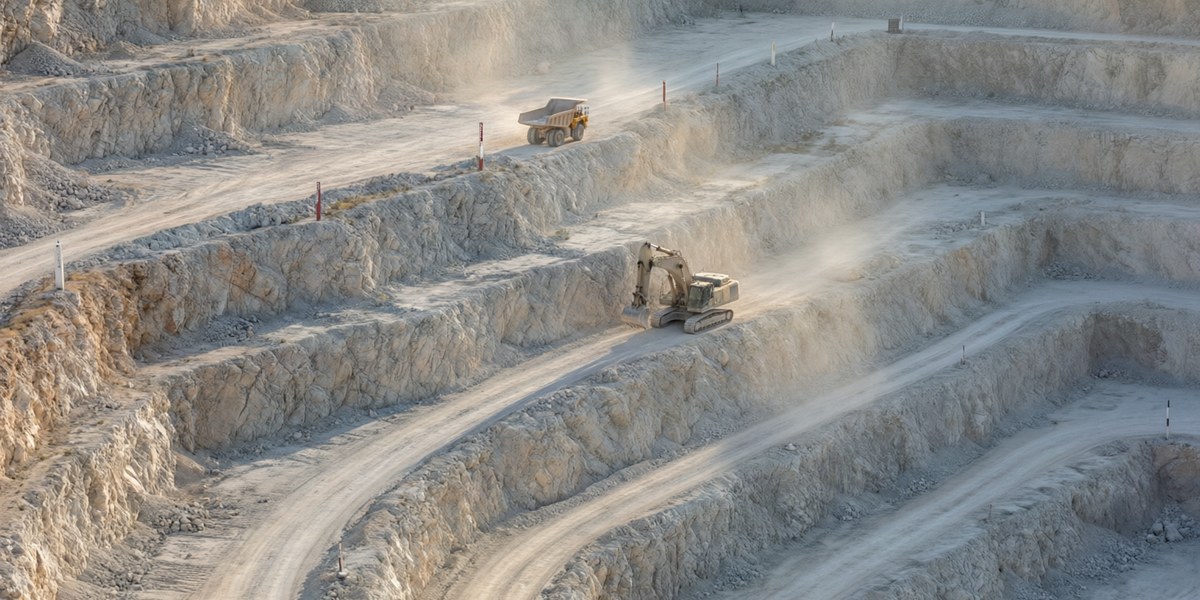
Where the manual approach breaks down
- Manual bench surveys put a crew on ground that is still moving.
- A blast window is lost while a survey team walks to the face.
- Ground-measured stockpiles rarely agree with dispatch tonnage.
- Haul-road damage is found by an incident, not by inspection.
How the unmanned workflow runs
Fly the ramp and the highwall
A hybrid-electric VTOL fixed-wing aircraft launches from the pit floor and covers bench faces, the crest line and the working floor in one pass, keeping the crew out of the danger zone.
Keep the picture usable in dust
A multi-sensor pod holds the visible and thermal channels on the same target, so a dust cloud or a hot bearing does not end the flight.
Put a vehicle on the haul road
A wheeled ground unit runs the road and berm line beneath the aircraft's track, checking surface damage, drainage and berm height.
Run the aircraft from one seat
The aircraft is flown from a handheld ground station that carries the video and telemetry feed on the same screen.
Frequently Asked Questions
Can the aircraft work while the pit is blasting?
No. Flying stops for the blast window and resumes once the area is cleared; the ground unit is also kept out until the all-clear, and the flight plan is re-flown after the bench changes.
Does this replace a volumetric survey?
It supports one. Imagery and the ground unit's route give a repeatable picture of what changed between two dates; a declared volume still needs the survey method your dispatch accepts.
What links the two systems together?
The aircraft flies from its handheld ground station with video and telemetry on one screen; the ground unit is driven from its own controller. They are listed together because a pit crew typically buys them as one package.