Industrial Plant & Pipeline Inspection with UGV and UAV
Two different problems get called inspection. One is a sensor that has to be carried to a specific point, which suits a ground vehicle. The other is a surface that has to be scanned from several angles, which suits an aircraft.
Where the manual approach breaks down
- Two different problems get called inspection: a sensor that must reach one point, and a surface that must be seen from several angles.
- Scaffolding, permits and confined-space procedures can cost more than the inspection itself.
- Repeating the same check every campaign is hard to justify when mobilisation dominates the cost.
- Plant routes are usually unsuitable for wheeled vehicles, and pipelines are rarely beside a road.
How the unmanned workflow runs
-
Step 1
Carry the sensor to the point with a UGV
A tracked ground vehicle takes the instrument to the measurement point, with payload classes from 30 kg upward, on plant routes and along pipe corridors.
Unmanned Ground Vehicles → -
Step 2
Get there across the site as it is
Trench crossing and gradient climbing matter more than road speed on a plant route, which is why the tracked chassis is specified instead of a wheeled one.
Unmanned Ground Vehicles → -
Step 3
Hover for what sits above
Structures, vessel walls and anything above the access route are covered by a hovering aircraft carrying the same class of imaging payload.
Multi-rotor UAVs → -
Step 4
Record condition, not just images
Thermal and optical imaging on a stabilised mount produce comparable records between campaigns, which is what turns a survey into a maintenance history.
Gimbals & Cameras →
Applicable equipment
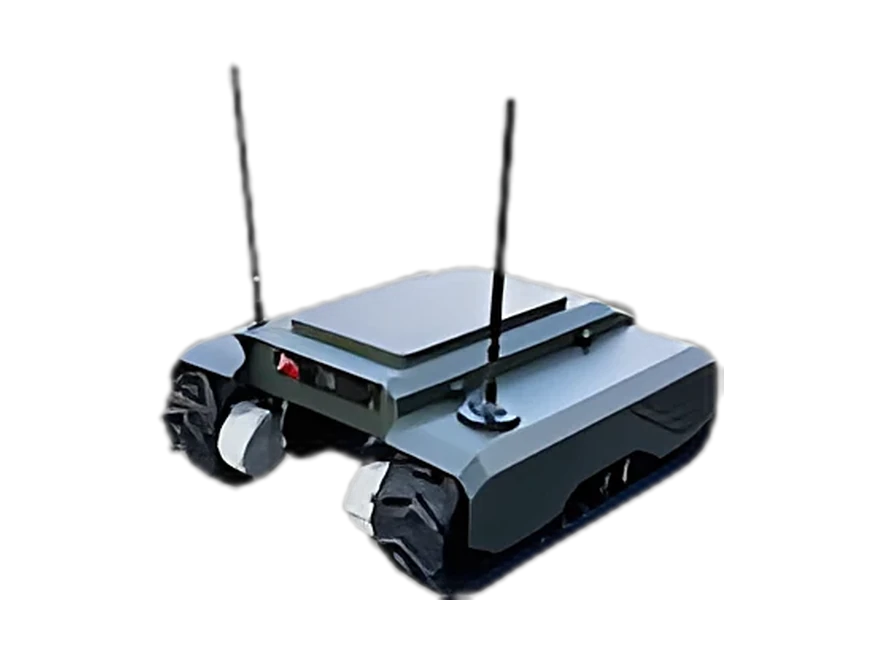
D50 Tracked Unmanned Ground Vehicle
Unmanned Ground Vehicles
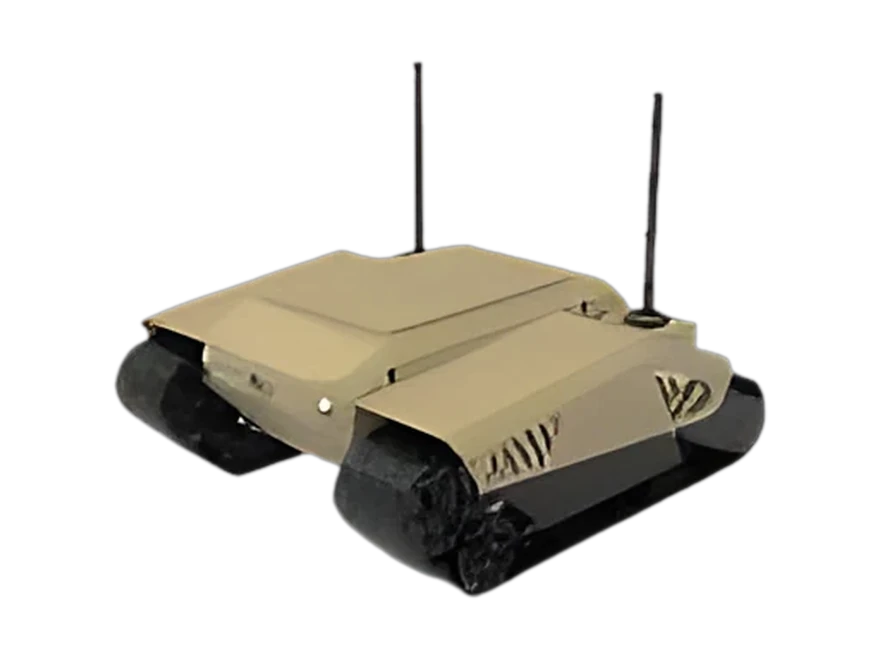
D100 Tracked Unmanned Ground Vehicle
Unmanned Ground Vehicles
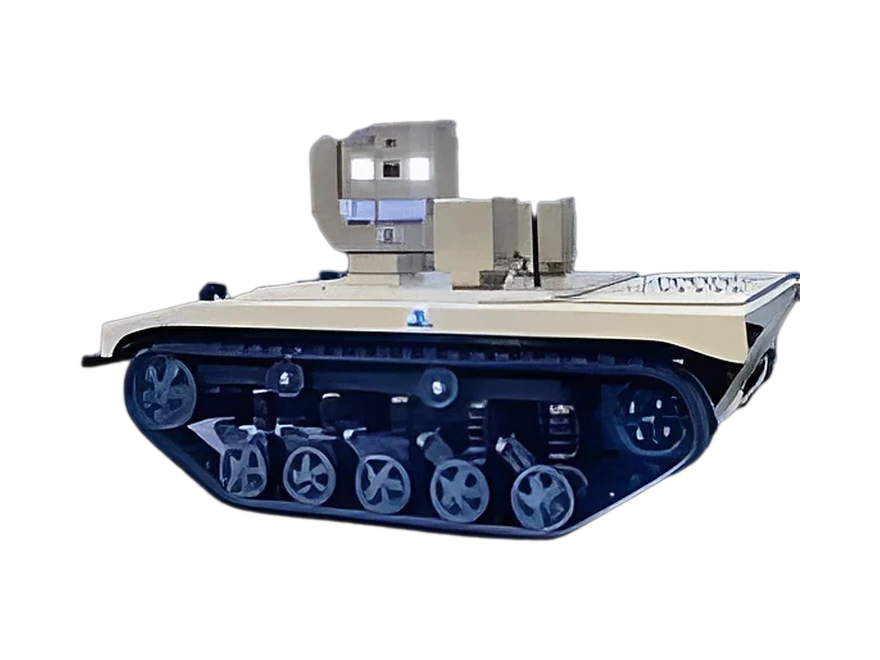
D200 Heavy-Load Tracked Unmanned Ground Vehicle
Unmanned Ground Vehicles
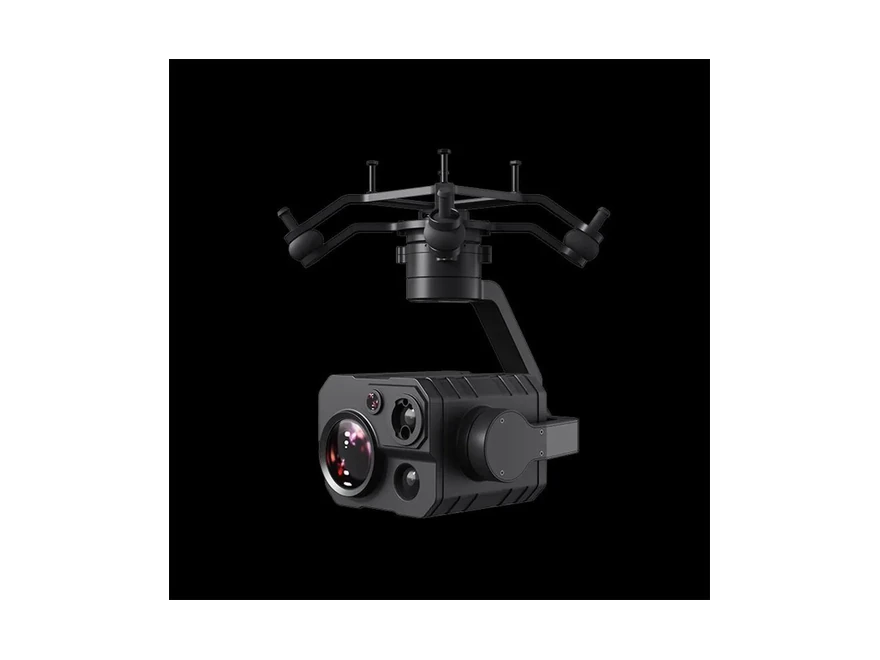
ZT30 Four-Sensor
Gimbals & Cameras
Equipment categories used
Unmanned Ground Vehicles · Multi-rotor UAVs · Gimbals & Cameras
Frequently Asked Questions
UGV or UAV for inspection?
Ground vehicle where the sensor must be carried to one point and the route is passable; aircraft where the object sits above the route or has to be seen from several angles. Many plants need both, and they share the payload class.
What payloads are available on the tracked vehicles?
The tracked UGV series covers 30 kg, 80 kg and 200 kg payload classes, which sets how large an instrument — or how much tooling — the vehicle can bring to the point of inspection.
How do they access a plant route?
Through trench crossing and gradient climbing rather than speed. The tracked chassis is chosen precisely because plant routes are not roads, and the crossing capability is what decides whether a given route is usable at all.
Send us the mission profile — area, distance, terrain and the deliverable you need — and we will come back with a configuration and a quotation.
Request a Quotation
Send the model and quantity — we reply with pricing, lead time and the specification sheet.