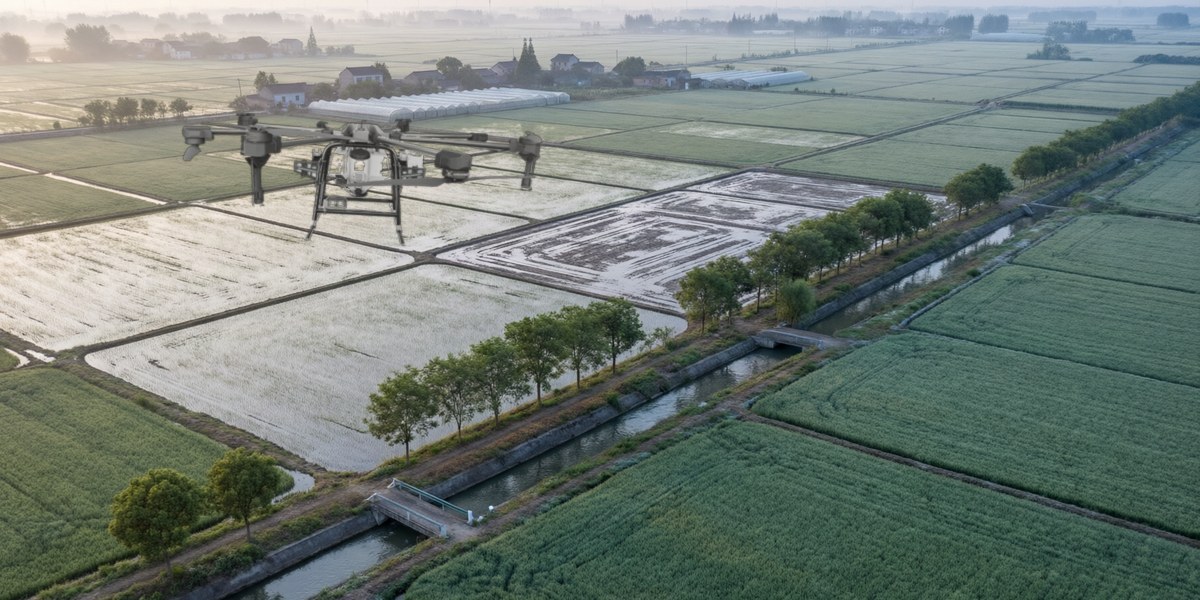
Where the manual approach breaks down
- A boom sprayer misses the blocks a tractor cannot drive through once the crop is up.
- Spraying windows are short, and a machine that spends them refilling covers half the area.
- Tank, boom and airframe are usually three machines for three seasons.
- End-of-tank wash-down is a maintenance event rather than a rinse.
How the unmanned workflow runs
Size the tank to the field
Four airframes cover the range: 16 L for small plots and inter-row blocks, 50 L for mixed holdings, and 100 L or 180 L where open fields make turn time the cost.
Change what it carries between crops
Spray, granule and seed duties run on the same airframe, so the machine is not idle between the spraying calendar and the drilling one.
Rinse it at the end of the day
The airframe is rated IP67, so wash-down after a tank is a rinse rather than a strip-down.
Fly the fleet from one station
The agriculture ground station is shared with the MK15 fleet, so an operator who already flies one flies both.
Frequently Asked Questions
Which tank size does a mixed holding start with?
The one that matches the smallest block you actually spray, because refill walks and turn time are what cost the day. 50 L is the usual starting point; 100 L and 180 L pay off once fields are open and contiguous.
Can it spread granules as well as liquid?
Yes. Granule and seed duties run on the same airframe, which is the point of carrying three roles on one machine.
What does the IP67 rating buy in practice?
A wash-down after a tank without opening the airframe up — the difference between a machine that is cleaned daily and one that is cleaned on schedule.